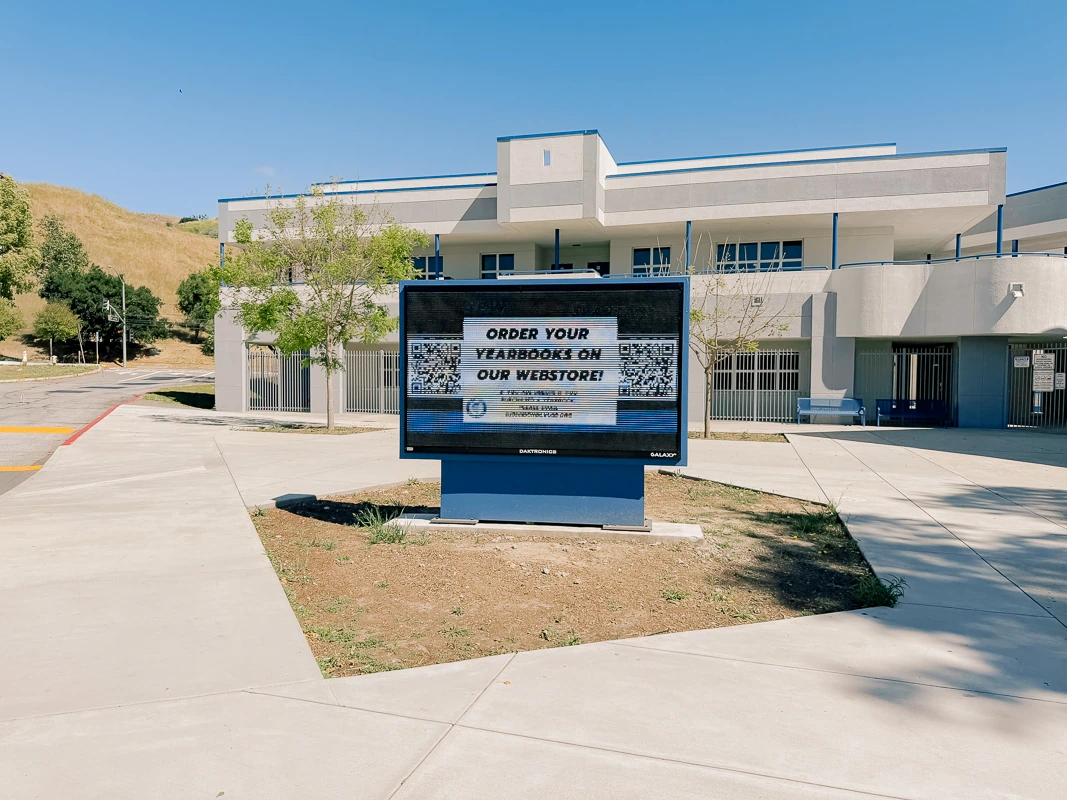
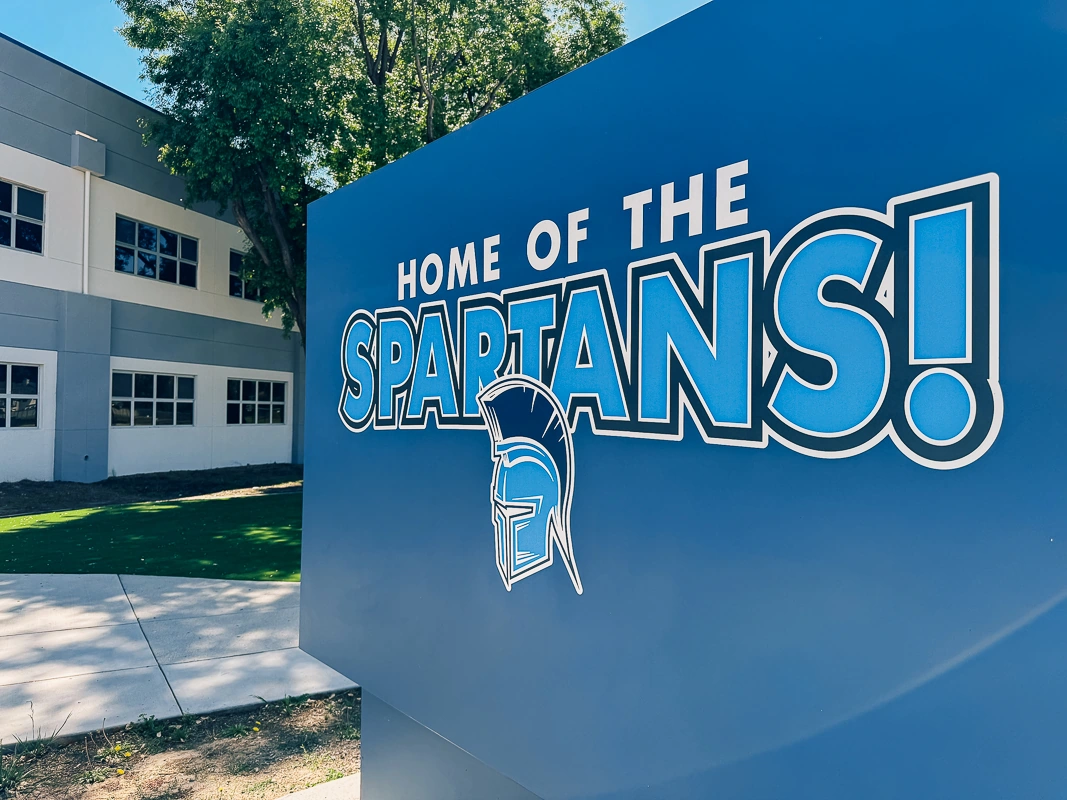
A.E. Wright School is a public campus in Calabasas, CA, serving a local student community with a need for clear, consistent communication on-site. The signage at the front of the campus needed to function as a primary information point for parents, students, and visitors moving through the area daily.
Description & the Challenge
The existing signage did not provide the flexibility required for school communication. Static messaging limited the ability to share updates, announcements, and event information in real time.
At the same time, the new sign had to fit within a structured campus environment. It needed to be highly visible from the road and pedestrian paths, while still aligning with the architecture and not overwhelming the space. Durability was also a factor, given outdoor exposure and continuous use.
The Solution
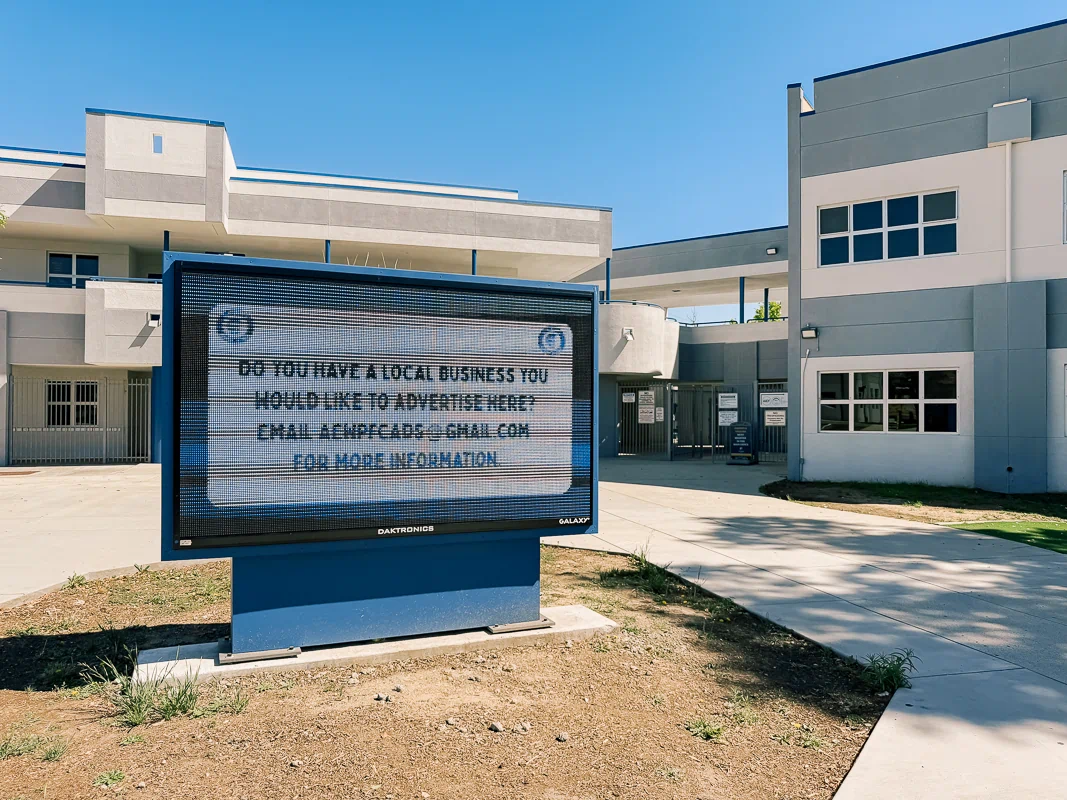
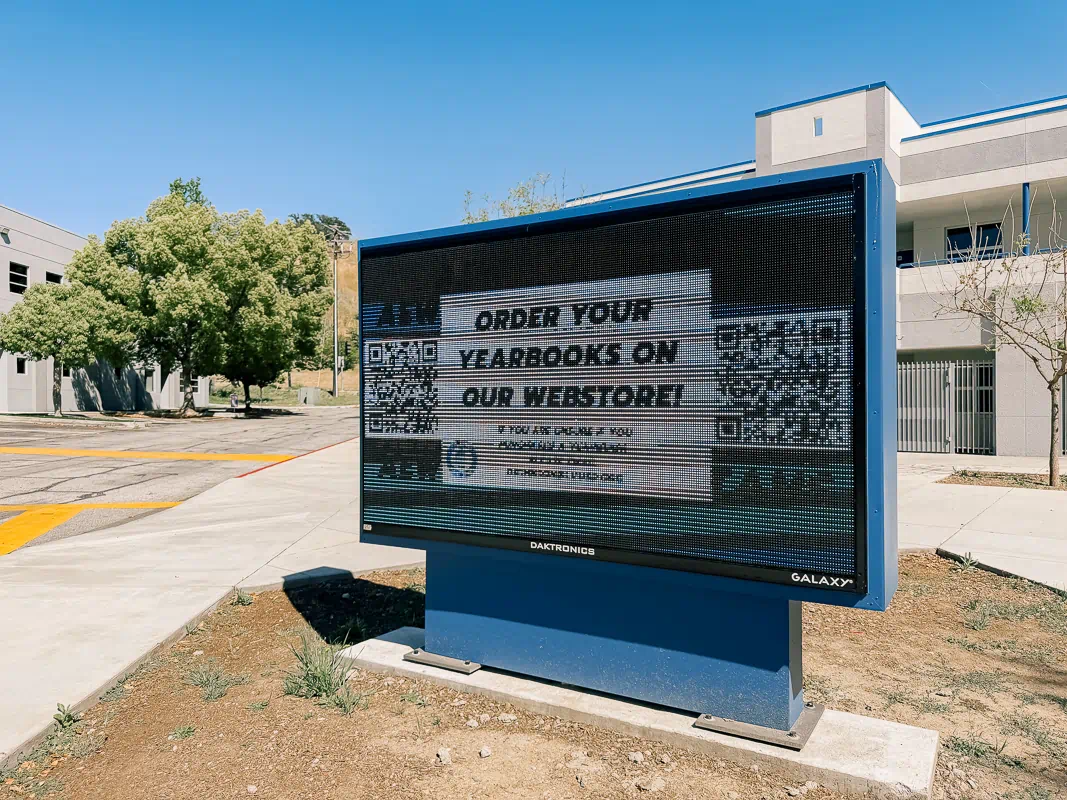
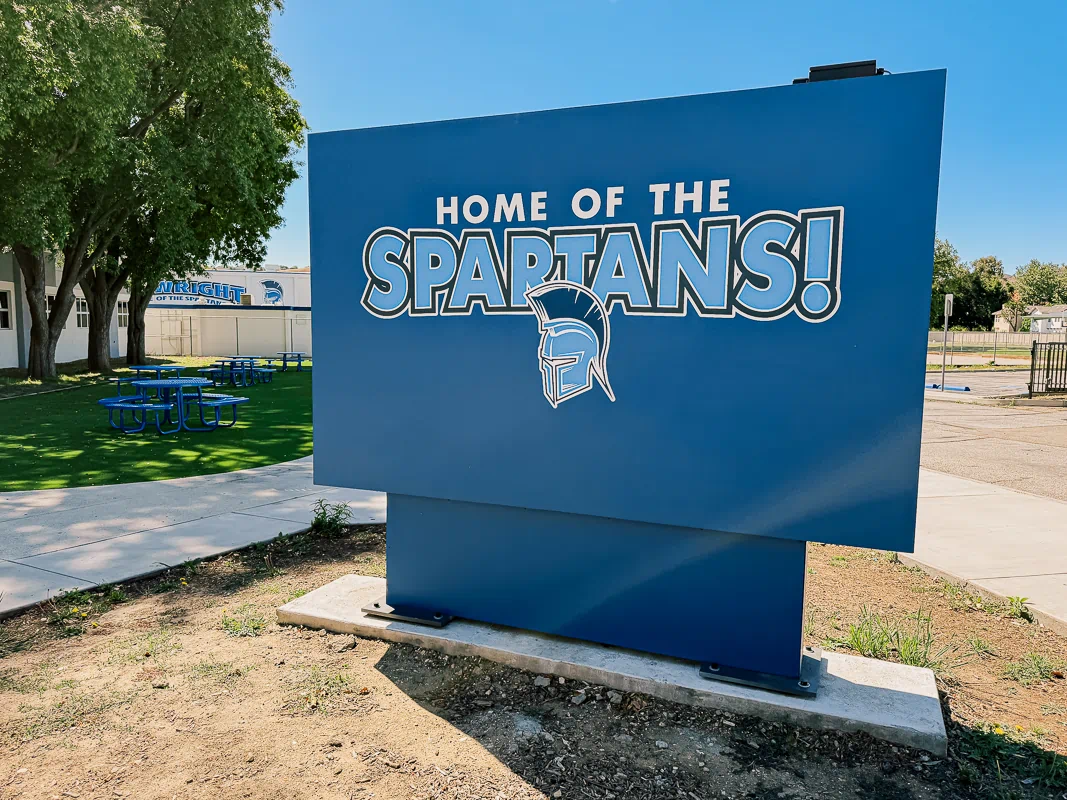
We designed, fabricated, and installed a custom digital marquee sign using a full-color LED display integrated into a steel-supported structure. The unit was mounted on a new concrete footing to provide long-term stability.
The display allows the school to update messaging dynamically, replacing static panels with a system that supports ongoing communication needs.
Design Considerations
The structure was built to balance visibility and permanence. The scale of the sign ensures readability from a distance, while the proportions keep it grounded within the campus setting.
The LED display was selected for clarity in varying lighting conditions, including direct sunlight. The framing and enclosure provide protection for the display while maintaining a clean front-facing presentation.
Material choices focused on durability and low maintenance. The steel structure and base anchoring system ensure the sign remains stable and secure over time, even with continuous operation.
The Impact
The new marquee shifts the sign from a static identifier to an active communication tool. It gives the school the ability to update messaging instantly, improving how information is shared with the community.
It also strengthens the front-of-campus presence, making the entry point more defined and easier to read for both vehicle and pedestrian traffic.
Key Benefits
- Dynamic messaging through full-color LED display
- Improved visibility from road and pedestrian approaches
- Durable steel structure with permanent foundation
- Clear communication tool for daily school operations
- Integrated design that fits within campus architecture
Projects like this focus less on decoration and more on function. The result is a system that supports everyday communication while holding up structurally over time.